
The Smartest Room You Already Own
Your garage is probably storing bikes, old paint tins, and things you'll never use again. Here's what it actually costs to turn it into something that adds real value to your home — and your life.
Of all the home improvements available to a UK homeowner, a garage conversion consistently delivers the best value for money. No foundations to dig. No new roof to build. No planning permission in most cases. You're simply transforming a structure that already exists into a room that actually gets used.
The challenge is knowing what it really costs, what drives the price up, and what the common mistakes are before you start. That's what this guide is for — straight answers, real numbers, and the things most builders won't tell you upfront.
Garage Types & Costs
The single biggest factor in your garage conversion cost isn't the room you're creating — it's the type of garage you're starting with. The more connected it is to your main house, the simpler and cheaper the conversion.
```Built into the main house and sharing its structure. The cheapest to convert — two walls are already insulated, electrics are usually close by, and no extra foundations are required.
Connected to the house with at least one shared wall. Plumbing and electrics can be run directly from the main property. Often allows for an opening to create open-plan living space.
A standalone structure entirely separate from the house. The most complex and expensive option — will likely need its own electrical feed, new plumbing runs, additional insulation on all walls, and potentially extra foundation work. A well-converted detached garage makes an exceptional home office, gym, or annexe with genuine privacy.
Double garage? Roughly double the cost for labour and materials, but you benefit from economies of scale — the team is already on site. A double garage conversion typically runs £18,000–£35,000. London and the South East carry a 25–40% labour premium over the national average.
As a useful rule of thumb, budget £1,200–£1,600 per m² for a standard garage conversion including insulation, flooring, electrics, plastering, and basic finishes. A typical single UK garage is around 16–18m², putting the baseline build cost at £10,000–£20,000 before any room-specific fit-out.
```What Room Will It Be?
The structure of your conversion sets the floor — the room it becomes sets the ceiling. Here's an honest breakdown by room type.
```The most popular use and most cost-effective. No plumbing needed. Good insulation, electrics, lighting, and internet connectivity are the priorities.
Similar to a home office structurally. Adding an en-suite adds £3,000–£8,000 for plumbing, tiling, and sanitaryware. A bedroom with en-suite is one of the highest-ROI configurations.
Structurally straightforward, but heating and sound insulation become more important. Knocking through to create open-plan living adds £1,500–£3,000 if a load-bearing wall is involved.
Requires full plumbing and drainage runs. Ventilation and waterproofing are non-negotiable. Best suited to attached or integral garages where pipes can connect easily to the main system.
A fully self-contained living space with kitchen, bathroom, sleeping, and living areas. Increasingly popular for elderly relatives or rental income. Almost always requires planning permission and a full building regulations application.
Budget Anatomy
Here's how the money breaks down on a typical garage conversion — and where the surprises tend to hide.
The Costs That Catch People Out
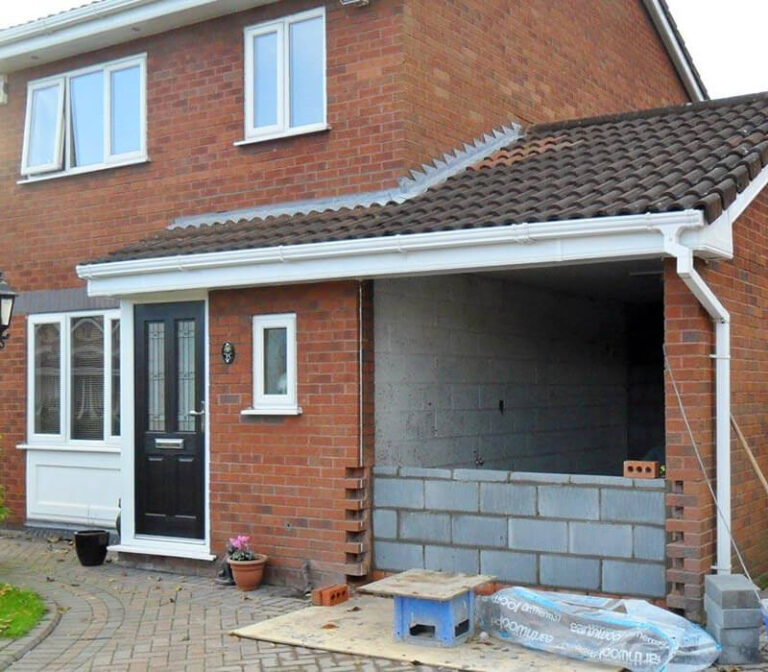
Blocking up the garage door: Infilling with matching brickwork, insulating the cavity, and plastering typically adds £1,000–£2,500. Factor it in from day one.
Flooring: Most garage floors are bare concrete slabs — uninsulated and often damp. You'll need insulation, screed, and a finished floor on top. Budget £40–£80 per m² for a decent engineered wood or tiled finish.
Heating: Extending the existing central heating system typically adds £800–£2,000. Underfloor heating costs £1,500–£3,000 for a wet system but works beautifully in a ground-floor space.
Asbestos: Garages built before 1985 may contain asbestos. A survey costs £200–£400, and licensed removal can add £500–£2,000. Don't skip this step on older properties.
Planning & Regs
In the majority of cases, you do not need planning permission — the conversion falls under Permitted Development rights. However, there are exceptions, and getting this wrong is expensive.
When You Will Need Planning Permission
Planning permission is required if your property is in a conservation area or is a listed building. It's also required if the original planning conditions specifically state that the garage must remain as parking — something common on many 1970s–1990s estates. Creating a self-contained annexe almost always requires a full planning application. Expect this to add 8–12 weeks and £500–£1,500 in fees.
Building Regulations — Non-Negotiable
Even when planning isn't required, Building Regulations approval always is. Your conversion must meet standards for structural stability, fire safety, insulation, ventilation, and drainage. A good design and build company will handle this as a matter of course.
Garage conversions done without Building Regulations sign-off will cause serious problems when you come to sell. Solicitors will ask for the completion certificate — if you can't produce one, sales fall through. It is never worth skipping this step.
Your Return
Garage conversions consistently deliver some of the strongest returns of any home improvement — primarily because the cost base is so much lower than building new. You're not paying for foundations, roof structures, or planning battles.
The highest-ROI configurations are a bedroom with en-suite and a self-contained annexe with rental income potential. Keep in mind: if off-street parking is genuinely scarce in your area, removing a garage can reduce buyer appeal. Be honest about your local market before proceeding.
Cost Control
Five things that make a real difference to your final bill.
The moment you add a bathroom, en-suite, or kitchen, the cost jumps significantly. If a bedroom or home office achieves your goals, the saving over a wet room can easily be £5,000–£10,000.
Knocking through to create open-plan space is appealing, but a structural opening with a steel beam adds £1,500–£4,000. If your layout works without it, leave the wall and save the money.
Garage conversions are notorious for being cold and damp if insulation is done cheaply. Spend the money on proper cavity wall insulation, insulated floor screed, and well-specified roof insulation. Retrofitting costs far more than doing it correctly during the build.
A conversion that looks like an afterthought will undermine the value uplift. Budget properly for matching brickwork, a well-designed new window or door opening, and external finishes that tie in with the rest of the property.
It costs £200–£400 and could save you from a very expensive mid-build surprise. Any garage built before 1985 should be surveyed before work starts.
"If you're parking on the drive and your garage is full of things you've forgotten you own, you're sitting on one of the most cost-effective home improvements available."
A garage conversion is the fastest, least disruptive, and most affordable way to add a genuine room to your home. There's no groundwork, no new roof, and no planning battle in most cases. You start with a structure that already exists and finish with a space that works for your life.
The key is getting the specification right from the start — proper insulation, the right room for your needs, a finish that ties in with the rest of your home, and Building Regulations signed off properly.
We design and build garage conversions that look and feel like they were always part of the house. If you're thinking about it, let's talk.
Let's Talk About Your Garage
Free consultation. Real numbers. No pressure. We'll assess your garage, discuss your ideas, and give you an honest view of what's possible and what it will cost.