Going Up or Going Out
Every loft conversion and extension guide you've read has buried the lead. Here's what it actually costs in 2026 — and what nobody else tells you before you sign anything.
There are hundreds of "cost guides" for loft conversions and extensions on the internet. Most are written to rank on Google, not to actually help you spend your money wisely. This one is different — it comes from people who price and build these projects every single week.
We're not going to tell you a loft conversion costs "between £20,000 and £150,000." That's useless. We'll tell you what drives the price, what the market actually looks like right now, what gets missed in almost every budget, and how to make the smartest call for your specific home.
Loft Conversions
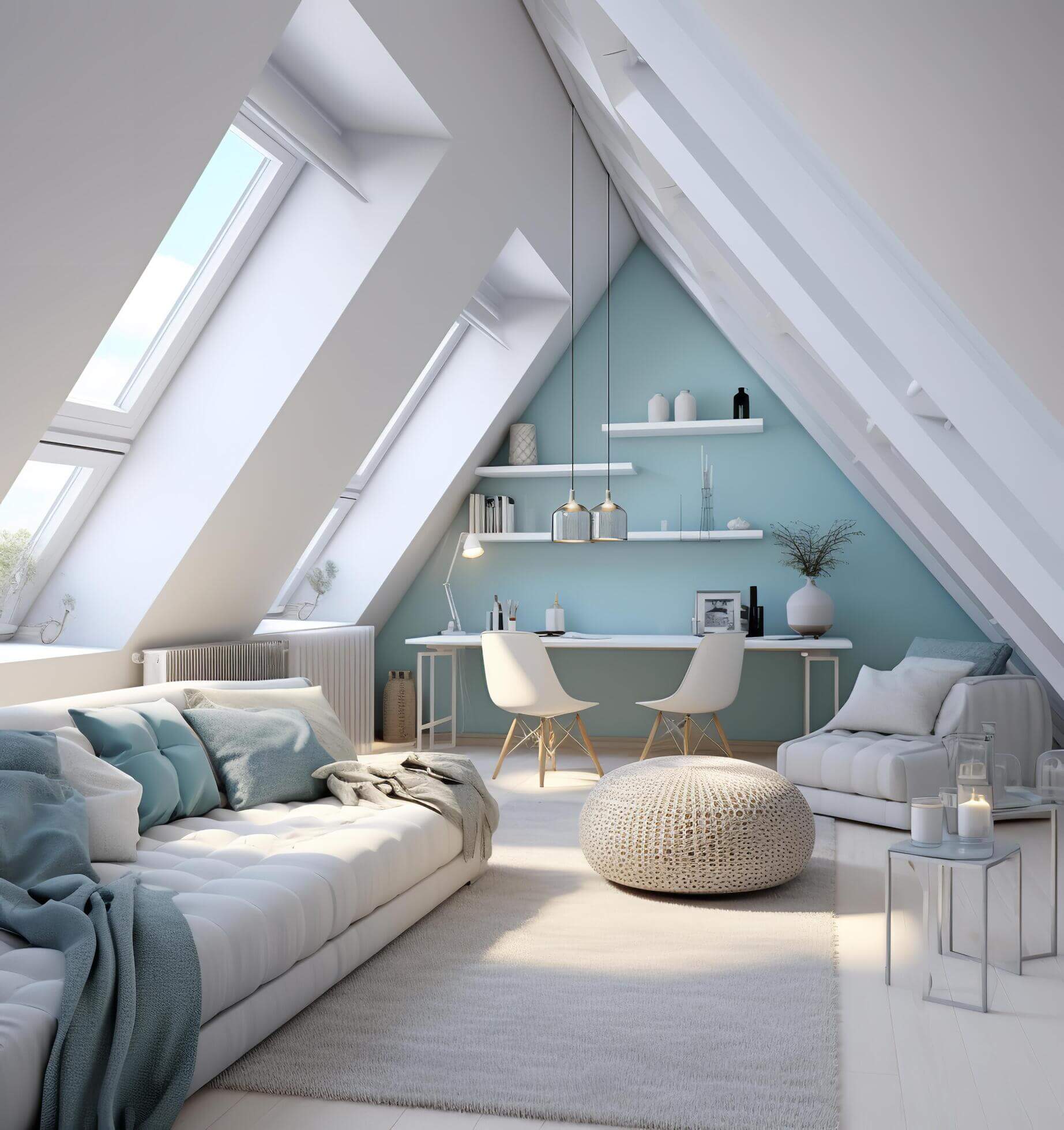
Your loft is probably worth more than you think. In most UK homes, there's a perfectly good extra bedroom — or two — sitting unused above your head. Converting it is almost always cheaper, faster, and less disruptive than building outward. But choose the wrong type and you'll either overspend or end up with a dark box nobody wants to use.
```What You're Actually Paying For
Works within the existing roofline — no structural changes to the shape. Best where planning is restricted or budget is tight. Least usable floor area of any type.
The UK's most popular choice. A box projection from the rear gives full ceiling height. Often falls under Permitted Development — no planning application needed.
Replaces the sloping side of a hipped roof with a vertical gable wall. Massive volume gain. Usually combined with a rear dormer for maximum impact.
Two dormers combined — rear and side. Popular on Victorian terraces. Easily accommodates two rooms with an en-suite. Worth every penny if your home suits it.
The most structurally ambitious option. The entire rear roof slope is replaced with a near-vertical wall — effectively adding another storey. Common in conservation areas and London period terraces. Almost always requires planning permission.
Labour costs rose 12% in 2026, while materials have levelled off. If you had a quote in 2023 or early 2024, get a new one — it won't reflect current pricing. London and the South East carry a 20–30% premium on every type.
Is Your Loft Even Convertible?
Before you plan anything, check three things. Head height: you need a minimum of 2.2m from floor joists to ridge — anything less means a roof-raise, which adds significant cost and always requires planning permission. Roof structure: older cut-rafter roofs convert easily; modern trussed roofs need modification, budget an extra £5,000–£10,000. Access: every habitable loft needs a proper fixed staircase, and finding space for one in an already tight upper floor is often the design challenge nobody anticipates.
```House Extensions
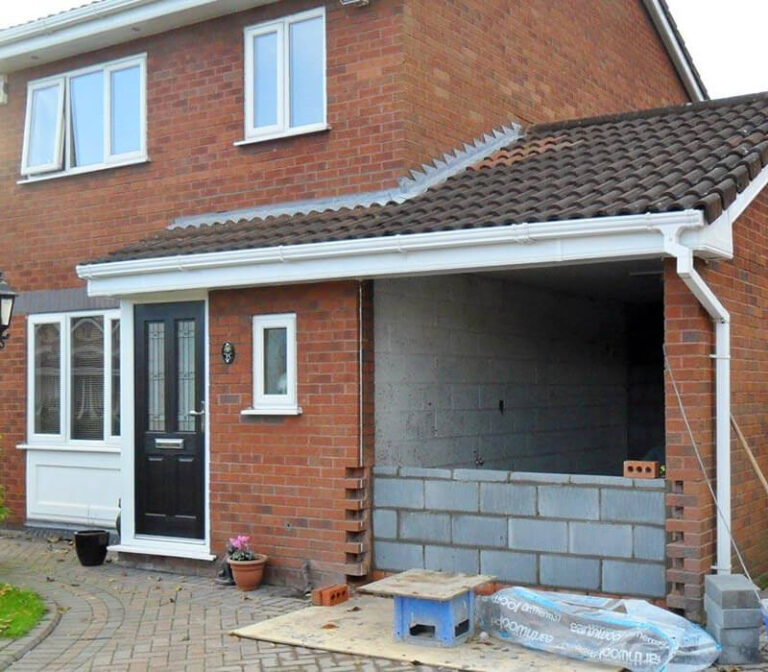
Extensions give you something a loft conversion rarely can: genuinely new ground-floor living space. The kitchen that opens to the garden, the double-height family room, the open-plan layout you've been sketching on napkins for years. But they're a bigger commitment — more planning, longer builds, more disruption.
```The classic. Most fall under Permitted Development. A 20m² kitchen-diner at standard spec typically lands at £40k–£70k — before the kitchen itself.
Uses the gap between you and the boundary. Great for utility rooms, studies, or garage infill. Usually requires detached or semi-detached property.
Counter-intuitive truth: cheaper per m² than single storey. Foundations and roof span two floors. If you need space above and below, build both at once — it saves tens of thousands.
Rear meets side in an L-shape. Beloved on Victorian terraces. Structural complexity at the junction pushes costs up — but the transformation is unmatched.
One thing most guides won't flag: the kitchen is not in the quote. Builder costs cover structure, roof, glazing, electrics, and plasterwork — not the kitchen itself. Add £15,000–£35,000 depending on specification. Budget for this from day one.
```Budget Anatomy
Here's how a typical project budget actually breaks down — and the proportions most people get wrong.
The Costs That Kill Budgets
Party Wall Agreement: Required if you build on or near a shared boundary. Not optional. Can add £700–£1,500 depending on whether your neighbour agrees quickly or appoints their own surveyor.
Structural Surveys: £500–£800 before a loft conversion. Skip it and risk discovering mid-build that your ceiling joists can't carry the load.
Staircase: £2,000 for a straight flight. £3,500 for a space-saver. £5,000 for a spiral. Finding where it fits in your existing layout without destroying a bedroom below needs solving before you commit.
Landscaping: Builders leave the garden however they leave it. Restoring paving, reinstating a lawn, or adding a terrace — budget £3,000–£15,000 and don't let it blindside you at handover.
Your Return
The real comparison isn't extension vs. doing nothing. It's extension vs. moving house. Moving a UK family to a larger property in 2026 typically costs £30,000–£60,000 in stamp duty, agent fees, legal costs, and removals — before paying a penny more for the bigger home itself.
In London and the South East, where a £400k home might gain £80–100k in value from a loft conversion, the ROI case is almost always compelling. Further north, the sums are tighter — but the quality-of-life return is exactly the same.
Cost Control
Five things that actually move the needle — not the filler advice you've already read elsewhere.
Every change made after construction starts costs three times what it would have at design stage. A variation order mid-build isn't just expensive in materials — it's expensive in time, disruption, and goodwill.
A rectangular extension with a pitched or flat roof costs less than an L-shape. Every internal corner, roof junction, and change of direction is labour and materials. Good design works with simplicity — not against it.
A quote that just says "loft conversion — £55,000" tells you almost nothing. Demand a breakdown: structure, staircase, glazing, electrics, insulation, finishing. Only then can you compare properly.
The most expensive way to build a double storey extension is to do the ground floor first, then come back later for the upper floor. You pay twice for scaffolding and twice for the disruption.
Hidden drainage runs. Substandard joists. Services in awkward places. These happen on a significant proportion of projects. Hold 10–15% of your total budget in reserve.
"The best home improvement is the one that solves your actual problem — not the one that looks best in a before-and-after."
If you need an extra bedroom and your roof structure is suitable, a dormer loft conversion is almost always the most cost-effective route. If you need to fundamentally change how your ground floor works — a proper open-plan kitchen, a connection to the garden — an extension is the answer, and it's worth doing properly.
The worst decision is rushing into either without the right design process. The second worst is budgeting only for the build and forgetting everything around it.
We've been doing this for years. We know where projects go wrong, and we know how to make them go right. If you're thinking about either — talk to us before you talk to anyone else.
Let's Talk About Your Home
Free consultation. Real numbers. No pressure. We'll visit your property and give you an honest view of what's possible and what it actually costs.